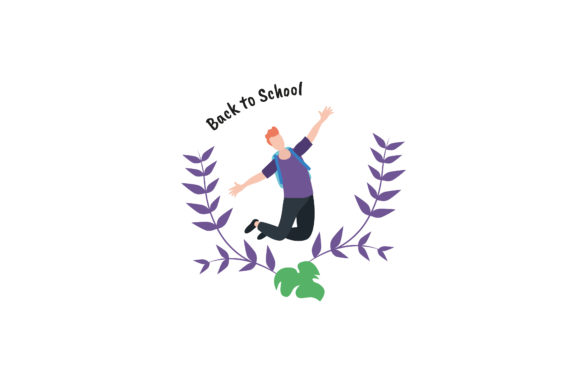
Back to School Flat Design Concept: A Complete Guide to Modern Educational Graphics
Whether you are a teacher preparing classroom materials, a parent helping your child with a school project, or a designer creating marketing assets for an educational brand, the visual language you choose matters. In recent years, one approach has risen to dominate educational design: the Back to School Flat Design Concept. This style is not just a passing trend. It is a deliberate, user-friendly way to communicate ideas clearly, efficiently, and beautifully. In this guide, we will explore what this concept is, why it matters, what features make it so versatile, and how you can use it effectively in your own work.
What Is the Back to School Flat Design Concept?
Flat design is a minimalist visual style that removes any three-dimensional embellishments such as gradients, shadows, textures, or bevels. Instead, it relies on clean lines, solid colors, and simple shapes to convey meaning. When applied to back-to-school themes, this design concept embraces imagery associated with learning: books, pencils, apples, backpacks, desks, chalkboards, graduation caps, and school buses. But instead of rendering these objects with realistic detail, flat design reduces them to their essential forms.
The result is a visual style that is instantly recognizable, easy to reproduce across different media, and highly accessible to viewers of all ages. For example, a flat design apple might be a simple red circle with a green leaf and a short brown stem. It does not need shading or highlights to communicate what it is. The viewer's brain fills in the rest. This simplicity is exactly what makes the Back to School Flat Design Concept so powerful in educational contexts.
Why Flat Design Works So Well for School-Related Content
There are several reasons why flat design has become the go-to choice for educational graphics, especially during the back-to-school season:
- Clarity: Minimalist visuals reduce cognitive load, making it easier for students and parents to understand information quickly.
- Consistency: Flat elements are easier to unify across a series of posters, worksheets, digital banners, and social media posts.
- Scalability: Because flat graphics do not rely on complex textures or gradients, they look crisp at any size, from a tiny icon to a large billboard.
- Inclusivity: The clean, high-contrast style is more readable for people with visual impairments or learning differences.
- Timelessness: Unlike highly realistic or trendy illustration styles, flat design tends to age gracefully and stays relevant longer.
Key Features of a High-Quality Back to School Flat Design
Not all flat design assets are created equal. Professional-grade Back to School Flat Design concepts come with a set of features that make them practical, flexible, and easy to use. Here are the most important ones you should look for:
Color RGB: The Digital Standard
RGB (Red, Green, Blue) is the color model used by screens — monitors, tablets, smartphones, and projectors. When a flat design asset is built in RGB, it ensures that the colors appear vibrant and accurate on digital displays. This is especially important for back-to-school materials that will be shared online, displayed on interactive whiteboards, or viewed on personal devices. RGB color mode allows for a bright, cheerful palette that appeals to children and parents alike. Typical back-to-school RGB palettes include warm reds, sunny yellows, cool blues, fresh greens, and neutral backgrounds that make the main elements pop.
Easy Scalable and Resizable
One of the biggest frustrations in design is creating something that looks great at one size but falls apart when you need to enlarge or shrink it. A properly constructed flat design concept uses vector-based elements, meaning the shapes are defined mathematically rather than by fixed pixels. This allows you to scale and resize the graphics without any loss of quality. Whether you need a small icon for a mobile app or a large banner for a school hallway, the design remains sharp and clear. This scalability is a huge time-saver, as you do not need to recreate assets for different use cases.
Easy Change Colors
Every school has its own brand colors, and every campaign may call for a different mood. A well-designed flat design asset makes it easy to change colors across the entire composition. This is typically achieved through the use of global colors or well-organized layer structures in the source files. With a few clicks, you can swap the red of an apple to match a school's crimson, or change the blue of a book to fit a specific theme. This flexibility eliminates the need to manually recolor each element, which saves hours of tedious work and reduces the risk of inconsistency.
Fully Editable Files
This is perhaps the most important feature for anyone who wants to customize their back-to-school graphics. Fully editable files mean you can modify every element — shapes, colors, text, sizes, and layers — to suit your exact needs. You are not stuck with a static image. Instead, you have access to the original working file, allowing you to add, remove, or rearrange components as you see fit. This empowers teachers, marketers, and designers to create unique materials without starting from scratch.
File Formats Included: PSD, AI, and EPS
When you invest in a Back to School Flat Design Concept, you will typically receive the source files in several professional formats. Understanding these formats helps you choose the right one for your workflow.
PSD — Adobe Photoshop
PSD is the native file format for Adobe Photoshop. While Photoshop is primarily known for raster (pixel-based) image editing, modern PSD files can also include vector shapes, smart objects, and organized layer groups. A PSD file of a flat design concept allows you to use Photoshop's powerful tools for color adjustments, filters, and compositing. If you already work in Photoshop, this format gives you a familiar environment to customize your back-to-school graphics. However, because Photoshop is a raster-oriented program, it is best to work with vector shapes within the PSD to maintain scalability.
AI — Adobe Illustrator
AI is the native file format for Adobe Illustrator, which is a vector-based design program. This is the ideal environment for flat design work. In Illustrator, you can easily scale your graphics infinitely, change colors globally, rearrange layers, and apply consistent styling. The AI file gives you access to the full vector backbone of the design, including paths, anchor points, and fills. For anyone serious about customizing flat design assets, the AI format is your best friend. You can edit each shape with precision and export your final design in any resolution or format you need.
EPS — Adobe Illustrator 10 Version
EPS (Encapsulated PostScript) is a versatile vector format that can be opened in many different programs, including older versions of Adobe Illustrator (such as version 10), CorelDRAW, Affinity Designer, and even some free software like Inkscape. An EPS file preserves the vector data, so your flat design remains scalable and editable. This format is especially useful for collaboration, because it does not require the recipient to have the latest version of a specific program. The EPS file acts as a universal bridge, ensuring that your back-to-school graphics can be used across different platforms and workflows.
Practical Applications of the Back to School Flat Design Concept
Now that you understand the features and file formats, let us explore how this concept is used in real-world scenarios. The Back to School Flat Design Concept is not just a theoretical style — it has concrete applications that make a difference in education, marketing, and daily life.
Classroom Materials and Worksheets
Teachers can use flat design graphics to create visually engaging handouts, flashcards, bulletin board decorations, and digital presentations. The clean lines and bright colors help students focus on the content rather than being distracted by unnecessary visual noise. For example, a math worksheet that uses flat icons of apples, pencils, and books to represent numbers feels approachable and fun, especially for younger learners.
School Marketing and Communication
Schools, tutoring centers, and educational brands need to communicate with parents and students through newsletters, social media, flyers, and websites. A consistent flat design theme builds brand recognition and conveys a modern, friendly, and professional image. Registration forms, event posters, and welcome kits all benefit from the cohesive look that flat design provides.
E-Learning and Digital Platforms
Online learning platforms, educational apps, and digital course materials rely heavily on visual interfaces. Flat design icons and illustrations make navigation intuitive and reduce the cognitive load on users. A well-designed dashboard with flat, recognizable school-themed icons helps students find assignments, check grades, and access resources without confusion.
Retail and E-Commerce
Stores that sell school supplies, backpacks, lunchboxes, and stationery use back-to-school flat design in their advertising, product packaging, and online listings. The cheerful, minimalist style appeals to both children and parents, making products feel approachable and affordable. A flat design banner featuring a backpack, a lunchbox, and a water bottle can communicate a complete back-to-school kit at a single glance.
Common Misunderstandings About Flat Design
Despite its popularity, flat design is sometimes misunderstood. Let me clarify a few points:
- Myth: Flat design is boring because it is simple. In reality, simplicity is a strength. When executed well, flat design is bold, vibrant, and highly effective at communicating messages quickly.
- Myth: Flat design is only for children. While it is child-friendly, flat design is also used by major corporations, tech companies, and professional brands because of its clarity and versatility.
- Myth: Flat design is easy to create, so it is not valuable. Good flat design requires a strong understanding of composition, color theory, and visual hierarchy. Minimalism is harder than it looks because every element must earn its place.
- Myth: Vector files are too complicated to edit. While vector software has a learning curve, the structure of a well-organized file makes editing straightforward. Most professional assets include labeled layers and instructions to help you get started.
How to Choose the Right Back to School Flat Design Asset
When you are looking for flat design graphics, whether for personal or professional use, keep these criteria in mind:
- Check the file formats offered. Make sure you get the source files you need — PSD, AI, and EPS are the most versatile combination.
- Verify scalability. The asset should be vector-based so you can resize it without quality loss.
- Look for color customization. Global colors or well-structured layers make recoloring effortless.
- Assess the visual style. Does the design align with your brand or the age group you are targeting? Bright and playful works well for young children, while muted or modern palettes may suit older students or professional materials.
- Review the license. Ensure you have the rights to use the graphics in your intended context, whether it is personal, educational, or commercial.
Getting Started with Your Own Back to School Flat Design
If you are new to working with flat design assets, here is a simple workflow to get started:
- Open the AI or EPS file in Adobe Illustrator (or a compatible vector editor).
- Explore the layers panel to understand how the design is structured.
- Use the color swatches or global color palette to change the overall color scheme to match your needs.
- Resize the artwork to the dimensions required for your project.
- Export the final file as PNG for digital use, or as PDF for print, ensuring you maintain the quality.
- Save a copy of the source file with your changes, so you can make further edits later if needed.
With these steps, you can transform a professional flat design concept into a personalized asset that serves your specific purpose, whether it is a classroom poster, a social media graphic, or a product label.
Conclusion
The Back to School Flat Design Concept is far more than a style choice — it is a practical, thoughtful approach to visual communication that prioritizes clarity, flexibility, and accessibility. With features like RGB color mode, easy scalability, changeable colors, and fully editable files in PSD, AI, and EPS formats, this concept empowers educators, designers, parents, and marketers to create professional-grade materials without unnecessary complexity. By understanding the principles behind flat design and the tools used to implement it, you can make your back-to-school content more engaging, consistent, and effective. Whether you are designing for a classroom, a brand, or a family project, flat design gives you the foundation to communicate clearly and beautifully.