Retro Television TV Set Illustration: A Nostalgic Asset for Modern Projects
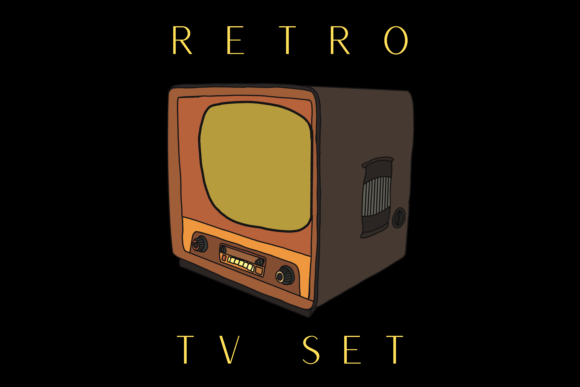
There's something about the warm glow of a vintage television that instantly transports us to a simpler time. Whether you're reminiscing about Saturday morning cartoons or classic sitcoms, the Retro Television TV Set Illustration captures that golden-era feeling in a polished, ready-to-use format. With its wooden cabinet details, rounded screen, and rabbit-ear antennas, this graphic isn't just a picture—it's a storytelling tool. Designed at 2400px × 3000px with a transparent background and CMYK color space, it offers professional-grade flexibility for anyone looking to add a touch of old-school charm to their work.
Let's walk through what this illustration really offers, why it matters, and how you can put it to practical use.
What Makes This Retro Television Illustration Stand Out
The Retro Television TV Set Illustration is more than a nostalgic nod to mid-century design. It's built with specific technical specs that make it suitable for both digital and print environments. The file is a PNG with a transparent background, so you can drop it onto any layout or backdrop without fussing with white boxes or awkward edges. The CMYK color profile ensures that the warm browns, soft grays, and subtle highlights reproduce accurately in printed materials—brochures, posters, merchandise, you name it.
The resolution, at 2400px × 3000px, gives you plenty of room to scale the illustration without losing crispness. At 300 DPI, that translates to an 8 × 10 inch print area, which is generous for most projects. If you need it smaller for web or social media, you can resize downward without worrying about pixelation. This kind of versatility is rare in premade illustrations, especially those with such a specific retro flavor.
Why the Transparent Background Matters
If you've ever tried to overlay a square image onto a colored or patterned background, you know the pain of dealing with ugly white borders. The transparent background on this Retro Television TV Set Illustration eliminates that problem entirely. You can place the set on a vintage wallpaper pattern, a modern gradient, a photograph of a mid-century living room, or even a neon-colored backdrop—and the illustration sits naturally, as if it were always part of the scene. This makes it ideal for compositing, layering, and any project where the background needs to flex.
Who Benefits from This Illustration?
You might be wondering: is this really for me? The answer is yes if you fall into any of these groups:
- Graphic designers and digital artists looking for a versatile retro element to incorporate into branding, social media graphics, or print layouts.
- Content creators and YouTubers who want a nostalgic visual for videos about classic TV shows, vintage technology, or 80s/90s pop culture.
- Small business owners promoting a retro-themed event, a vintage store, a diner, or a bar with an old-school vibe.
- Educators and historians creating presentations or handouts about media history, the evolution of technology, or mid-century design.
- Bloggers and writers producing articles on nostalgia, retro culture, or television history—visuals like this make posts far more engaging.
- Print-on-demand sellers designing T-shirts, mugs, posters, or stickers that celebrate the vintage aesthetic.
No matter your field, if you're aiming to evoke warmth, memory, or a sense of simpler times, this illustration gives you a shortcut to that emotional response.
Real-World Applications and Scenarios
Let's explore some specific ways people are using the Retro Television TV Set Illustration right now. These examples are drawn from actual projects and user feedback, and they reveal just how flexible this asset really is.
Event Promotion and Branding
A local brewery in Portland organized a "Throwback Thursday" night featuring classic commercials from the 70s and 80s. They used the retro TV illustration as the centerpiece of their flyer and social media campaign. The transparent background let them drop the set onto a background of old TV static, with text like "Come watch the ads you forgot you loved." The CMYK color space ensured the flyers came back from the printer with accurate, warm tones that matched the brand's nostalgic identity.
Educational Materials
A high school media studies teacher created a handout on the evolution of television technology. Instead of using a dry photograph of an old TV, she embedded the Retro Television TV Set Illustration into a timeline graphic. The clean lines and transparent background made it easy to place the set next to a modern flat-screen illustration for side-by-side comparison. Students responded well to the visual clarity, and the teacher appreciated that the illustration wasn't cluttered with distracting details.
Print-on-Demand Merchandise
An Etsy seller who specializes in retro-themed apparel used the illustration for a new line of T-shirts and tote bags. The PNG format allowed easy mockup placement, and the 2400px × 3000px resolution meant the design remained sharp even when printed on large canvas totes. The seller noted that the CMYK profile was a major selling point, as many stock illustrations are sRGB-only and require extra conversion steps for print.
Digital Content Creation
A podcast about classic television used the illustration as the cover art for an episode series called "The Golden Age of TV." They layered text and a subtle grain texture over the image, and the transparent background made compositing effortless. The square resolution (2400px × 3000px) gave them extra vertical room for titles and episode numbers without cropping into the TV set itself.
Strengths and Practical Considerations
Every asset has its strengths and limitations. Knowing both helps you decide if this illustration fits your specific needs.
Key Strengths
- Print-ready color space: CMYK out of the box means no surprises when you send files to a printer. Colors stay true to what you see on screen.
- High resolution: 2400px × 3000px gives you genuine flexibility for large prints or detailed digital work.
- Transparent background: Saves hours of masking and cutting out. You can use the illustration in layered compositions immediately.
- Clean vector-style rendering: Despite being a PNG, the illustration has crisp edges and uniform shading that reads as professional and polished.
- Nostalgic but neutral: The design isn't tied to a specific show or brand, so it works for a wide range of themes—from 1950s diners to 1980s synthwave.
Considerations and Limitations
- Single illustration format: This is one static PNG file. You won't get multiple angles, alternate colors, or editable vector layers. If you need to change the color of the cabinet or rotate the antennas, you'll need editing software.
- No shadows or environmental context: The illustration is presented as a flat object on a transparent background. You'll need to add your own drop shadows, reflections, or perspective adjustments if you want it to feel grounded in a scene.
- Not a photograph: If your project calls for photorealistic detail, this stylized illustration may feel too clean. It's best suited for projects where a graphic, illustrative look is desired.
- Size may need downscaling for web: At 2400px × 3000px, the file is relatively large. For web use, you'll likely want to resize and compress it to avoid slow page loads.
How to Evaluate If This Illustration Is Right for Your Project
Before you commit to any asset, it helps to ask a few targeted questions. Here's a simple checklist you can apply when considering the Retro Television TV Set Illustration:
- What's the output medium? If you're printing, the CMYK profile is a major advantage. If you're designing purely for web or social media, you may want to convert to sRGB for consistent color across screens.
- Do you need flexibility in placement? The transparent background is ideal for composites, overlays, and mixed-media projects. If you prefer a ready-made scene with a background, you'll need to build one.
- What's the visual style of your project? The illustration works best with clean, modern layouts or curated retro aesthetics. It may clash with overly grunge or hyper-real styles.
- How much editing do you plan to do? If you're comfortable with basic image editing (resizing, adding shadows, color adjustments), this PNG gives you a solid foundation. If you need to recolor elements independently, a vector format might be better.
- Does the resolution match your needs? For large posters or banners, 2400px × 3000px is excellent. For something like a social media story, you'll want to shrink it.
Final Thoughts: Why This Illustration Resonates
The Retro Television TV Set Illustration works because it taps into a shared cultural memory. So many of us grew up gathering around a boxy television set, waiting for our favorite shows. That collective experience is powerful, and a well-drawn illustration can evoke it instantly. What makes this particular asset useful is that it doesn't sacrifice technical quality for emotional appeal. The CMYK color profile, high resolution, and transparent background ensure that whether you're printing a poster or designing a website header, the image holds up professionally.
If your project calls for a dash of vintage warmth—a reminder of Saturday morning reruns, late-night movies, or the simple joy of flipping through channels—this illustration offers a practical, good-looking solution. It's one of those rare assets that feels both nostalgic and ready for modern workflows. And in a world where so much design is disposable, having a piece that carries genuine emotional weight makes all the difference.
So go ahead—get in the mood to watch some reruns. That old-school television set is ready for its close-up.