Understanding the Back to School Vector Banner Concept for Modern Design Projects
When you are preparing seasonal marketing materials, educational resources, or promotional content for the academic season, the visual foundation you choose can significantly influence how your audience responds. The Back to School Vector Banner Concept offers a structured yet flexible approach to creating visuals that resonate with students, parents, and educators alike. Rather than starting from scratch with photography or complex illustrations, this concept provides a ready-to-use framework built around school supplies and education elements in a flat vector style. Understanding what this concept delivers, how it compares with other visual approaches, and where it fits best can help you make a more informed decision for your specific project needs.
What the Back to School Vector Banner Concept Delivers
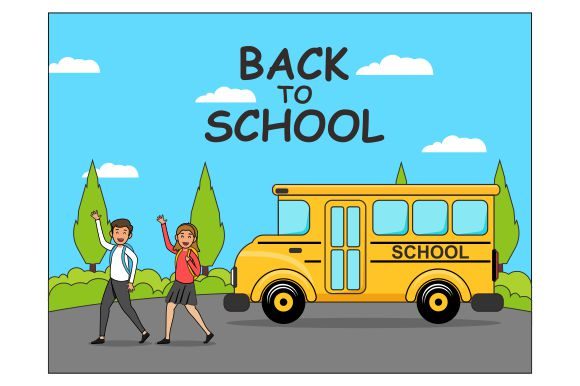
At its core, this concept is a pre-designed visual theme that centers on familiar school-related objects such as pencils, books, rulers, globes, backpacks, and chalkboards, all rendered in a clean flat vector illustration style. The file package includes both JPG and EPS10 formats at a generous 3000×3000 pixel resolution, with the illustration placed on a white background. This setup gives you immediate access to a high-resolution banner that you can drop into presentations, social media posts, flyers, or website headers with minimal adjustment. The flat vector approach means the artwork avoids gradients, shadows, and overly realistic textures, which keeps the file size manageable and the visual message direct and uncluttered. For designers and non-designers alike, having both a raster preview and an editable vector source file provides flexibility: you can use the JPG for quick deployment or open the EPS10 in vector editing software to customize colors, rearrange elements, or scale the artwork without losing quality.
How This Concept Compares with Alternative Visual Approaches
When evaluating the Back to School Vector Banner Concept against other options, it helps to consider the broader landscape of visual assets available for educational and seasonal campaigns. Photography, for example, can convey realistic emotion and context, but it often requires careful lighting, model releases, and higher file sizes. A photograph of a classroom or a student holding supplies may feel more authentic in certain contexts, yet it can also lock you into a specific mood or demographic that may not align with your target audience. In contrast, the flat vector banner concept avoids these constraints by using stylized, universal imagery that works across age groups and cultural settings. Another common alternative is using custom illustrations created from scratch. While bespoke artwork offers complete creative control, it demands time, budget, and skilled illustrators. The vector banner concept sits between these extremes: it gives you a professionally designed base that you can adapt without needing advanced illustration skills or a long production timeline.
Flat Vector versus Realistic or Isometric Styles
Within the illustration category, you may also encounter isometric or semi-realistic vector styles. Isometric illustrations add a three-dimensional feel, which can be effective for showing spatial relationships or product details. However, they often require more complex composition and may not scale down as cleanly for small banners or mobile screens. The flat vector style used in this banner concept prioritizes clarity and quick recognition. School supplies rendered in flat colors with simple outlines are immediately identifiable, which is especially useful when your banner needs to communicate a message at a glance, such as during back-to-school sales or enrollment drives. If your project calls for a more tactile or immersive look, an isometric or textured style might serve you better. But if you need a versatile, lightweight visual that works across print and digital formats, the flat vector approach holds a clear advantage.
Strengths and Practical Tradeoffs
Every design resource comes with strengths and limitations, and the Back to School Vector Banner Concept is no exception. One of its strongest assets is the inclusion of both JPG and EPS10 files at a high resolution. This dual-format approach means you can work with the asset regardless of your software ecosystem, whether you rely on Adobe Illustrator, CorelDRAW, Affinity Designer, or even simpler tools like Canva (by importing the JPG or converting the EPS). The 3000×3000 pixel size provides ample resolution for large prints, social media covers, and presentation slides without noticeable pixelation. Another strength is the white background, which simplifies compositing into existing layouts. You can place the banner onto colored backgrounds, overlay text, or combine it with other graphics without needing to extract the illustration from a busy scene.
However, there are tradeoffs to consider. Because the illustration is provided as a complete banner composition rather than individual, separated elements, customizing specific items like changing the color of a single pencil or replacing a book with a tablet may require more advanced vector editing skills. The EPS10 format supports editing, but not all software handles EPS files equally well, and some users may find the learning curve steeper than expected. Additionally, the flat vector style, while clean and modern, may feel too simplistic for brands aiming for a premium, textured, or handcrafted aesthetic. If your target audience expects highly detailed or photorealistic visuals, this concept might not align with those expectations. The white background, while convenient for many uses, also means the banner is not transparent out of the box, so if you need to overlay it on a patterned or dark background, you will need to remove the white area using your editing software.
Best-Fit Situations for This Banner Concept
The Back to School Vector Banner Concept is particularly well-suited for several common scenarios. If you are a small business owner or a marketing coordinator at a school supply store, tutoring center, or educational nonprofit, having a professional banner ready in minutes can save significant production time. You can add your own headline, logo, and call-to-action over the illustration, and the flat style ensures that text remains legible without competing with complex background details. Similarly, teachers and school administrators who need to create welcome banners, classroom posters, or newsletter headers will find the concept approachable. The education elements are universally recognizable, so parents and students immediately associate the visuals with learning, preparation, and the start of a new academic year.
Another strong use case is in digital content creation. Social media managers running back-to-school campaigns can use the banner as a profile cover, Instagram story background, or email header. The square 3000×3000 format is particularly convenient for platforms that favor square or near-square aspect ratios, and the high resolution allows for cropping to landscape or portrait orientations without losing quality. Freelance designers who serve multiple clients can also benefit from having a versatile base that can be quickly customized with different color palettes or text placements, reducing the time spent on each project.
When an Alternative Might Be a Better Choice
While the Back to School Vector Banner Concept is a solid resource, there are situations where other options may serve you better. If your project requires a transparent background for layered compositing, you might prefer a vector asset that provides individual elements or an SVG format with built-in transparency. Similarly, if you need to match a very specific brand color scheme or incorporate complex data visualizations, starting from a blank canvas with custom illustrations could give you more precision. For campaigns targeting older teenage or college audiences, the school supplies imagery may feel too juvenile; in such cases, a more abstract or typographic banner concept might resonate more effectively. Additionally, if your workflow relies heavily on free or low-cost tools that do not fully support EPS10 files, you may encounter compatibility issues. In that scenario, seeking a banner concept offered in SVG, AI, or native file formats for your software could reduce friction.
Key Factors to Consider Before Choosing
Before deciding whether the Back to School Vector Banner Concept fits your needs, think about the following decision factors:
- Your editing skill level: If you are comfortable with vector editing software, the EPS10 file gives you extensive control. If you prefer a drag-and-drop approach, the JPG version is ready to use but limits customization.
- Your distribution format: For print materials like flyers and posters, the 3000×3000 resolution is excellent. For web use, you may want to compress the file to reduce load times while maintaining visual quality.
- Your audience expectations: Consider whether your viewers will respond better to flat vector illustrations or to more detailed, realistic imagery. Test a small sample if possible.
- Your timeline: This concept allows for rapid deployment. If your campaign launches within days rather than weeks, the convenience of a pre-made banner is a strong advantage.
- Your budget: A freebie resource like this one eliminates design costs, making it a practical choice when funds are limited. For larger budgets, custom work may offer more differentiation.
Practical Examples of Using This Concept in Real Projects
Imagine you are managing a community college outreach campaign. You need a banner for social media that announces early registration. You download the Back to School Vector Banner Concept, open the EPS10 file in your vector editor, and adjust the color palette to match the college's brand blue and gold. You replace the generic text area with the registration date and a link. Within thirty minutes, you have a polished banner ready for Facebook and Instagram. In contrast, if you had commissioned a custom illustration, the process might have involved multiple rounds of feedback and several days of turnaround time. The tradeoff is that your banner looks similar to other flat-style educational graphics online, but for a time-sensitive announcement, speed and consistency matter more than uniqueness.
Another example: a parent-teacher association needs a flyer for a school supply drive. Using the JPG version, the volunteer organizer adds a transparent overlay with text using a simple photo editor. The result is clear, cheerful, and immediately recognizable as a back-to-school initiative. The flat vector style helps the flyer print well on standard office paper without heavy ink usage. If the same organizer had chosen a photograph, they would have needed to ensure proper resolution, licensing, and cropping, adding complexity to an already busy schedule.
Making an Informed Decision
Choosing the right visual concept for your back-to-school project ultimately depends on balancing your specific requirements for speed, customization, budget, and audience fit. The Back to School Vector Banner Concept offers a practical middle ground: it is more polished than a basic template, more accessible than custom illustration, and more versatile than a fixed photograph. By understanding what makes this concept distinct and where its limitations lie, you can decide whether it aligns with your goals or whether another approach would serve you better. If you need a clean, adaptable, and professional banner that works out of the box with minimal effort, this freebie concept is a resource worth adding to your design toolkit. Take advantage of the included JPG and EPS10 files, experiment with customization, and see how the flat vector style enhances your back-to-school communications.