The Art of Learning: How Detail Doodle Back to School Transforms the Classroom Experience
There is something almost magical about the first day of school. The smell of fresh notebooks, the crisp edges of unopened textbooks, and the quiet hum of anticipation in the air. But in recent years, a different kind of energy has been finding its way into classrooms—one that combines the free-flowing creativity of drawing with the structured logic of numbers. This intersection is where the concept of Detail Doodle Back to School begins to shine. When you take the playful, intricate nature of doodling and pair it with a Detail Doodle Back to School with mathematic background, you open up an entirely new avenue for engagement, comprehension, and joy in learning. This article explores how this fusion works, why it matters, and how educators, parents, and students can make the most of it.
What Exactly Is Detail Doodle Back to School?
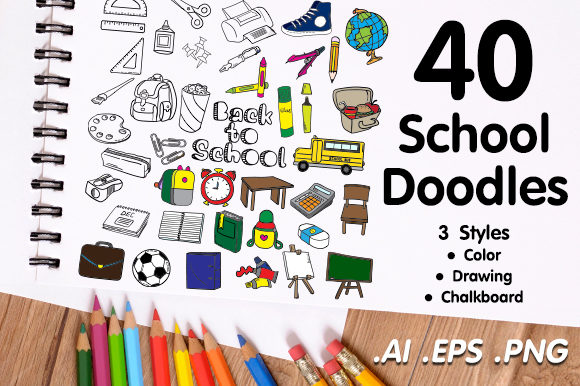
At its core, Detail Doodle Back to School refers to the practice of incorporating detailed, hand-drawn or digitally created illustrations into the back-to-school experience. These are not simple stick figures or random scribbles. They are carefully crafted doodles that often contain layers of information, hidden elements, and thematic connections to academic subjects. When you introduce a Detail Doodle Back to School with mathematic background, you are essentially embedding mathematical concepts—geometric shapes, equations, graphs, number patterns, or even historical mathematical figures—into the visual landscape of the doodle itself.
The result is a learning tool that works on multiple levels. A student might see a detailed doodle of a school bus, but upon closer inspection, the windows form a Fibonacci sequence, the wheels are perfect circles with labeled radii, and the exhaust smoke contains a series of prime numbers. This approach transforms passive observation into active discovery.
The Psychology Behind Doodling and Learning
It is easy to dismiss doodling as mindless distraction. But research in educational psychology tells a different story. Studies have shown that doodling can improve focus, memory retention, and even creative problem-solving. When a student engages with a Detail Doodle Back to School, they are not just looking at an image—they are interacting with it. Their brain is working to decode the visual information, make connections, and find meaning. When that doodle is underpinned by a Detail Doodle Back to School with mathematic background, the cognitive load increases in a productive way. The student must shift between visual-spatial reasoning and logical-mathematical thinking, which strengthens neural pathways and deepens understanding.
I have seen this firsthand in classroom settings. A child who struggles with abstract numbers on a worksheet might suddenly light up when they encounter the same numbers hidden inside a detailed doodle of a school playground. The context makes the math feel real, tangible, and even playful.
Key Characteristics of Effective Detail Doodle Back to School Content
Not every doodle is created equal. To truly harness the power of Detail Doodle Back to School, certain qualities need to be present. First, the level of detail must be intentional. Every line, shape, and symbol should serve a purpose, whether aesthetic or educational. A Detail Doodle Back to School with mathematic background should not just slap a few numbers onto a drawing. The math should be woven into the fabric of the image. For example, the pattern of bricks on a school wall might represent multiplication tables, or the branches of a tree in the schoolyard could illustrate fractal geometry.
Second, the doodle should invite exploration. The best ones have layers. A student might first notice the overall scene—a bustling school hallway, perhaps. Then they start noticing the chalkboard in the background filled with algebraic expressions. Then they realize the floor tiles are actually a coordinate grid. This kind of depth keeps students engaged over multiple sessions.
Third, accessibility matters. A Detail Doodle Back to School should be usable across different age groups and skill levels. A kindergarten-friendly version might focus on counting and basic shapes, while a version for middle schoolers could incorporate fractions, ratios, or introductory geometry. The mathematical background should adapt without losing its core identity.
Practical Benefits for Students and Educators
Why should a teacher invest time in using or creating Detail Doodle Back to School materials? The benefits are numerous. For one, these doodles serve as exceptional icebreakers at the start of the school year. Instead of diving straight into a textbook, a teacher can present a large Detail Doodle Back to School with mathematic background on the board or as a handout. Students can work individually or in groups to identify all the mathematical elements hidden within the drawing. This collaborative activity builds classroom community while gently easing students back into academic thinking.
Another practical benefit is differentiation. In any classroom, students come with varying levels of mathematical fluency. A detailed doodle naturally accommodates this range. A student who is less confident in math might focus on identifying shapes and colors, while a more advanced student can tackle the embedded equations or patterns. No one feels left out, and everyone learns at their own pace.
Beyond the classroom, parents can use Detail Doodle Back to School resources at home to make homework less daunting. Instead of a boring page of problems, a child can engage with a doodle that contains the same problems in a visually appealing context. This shift in presentation can reduce anxiety and increase willingness to practice.
How Detail Doodle Back to School with Mathematic Background Fits into Modern Workflows
Digital tools have made the creation and distribution of detailed doodles easier than ever. Teachers can use tablets, styluses, or even simple drawing software to create custom Detail Doodle Back to School with mathematic background content. These can be printed, projected, or shared via learning management systems. Some educators are even using AI-assisted drawing tools to generate base templates, which they then customize with specific mathematical content for their lesson plans.
In the broader educational technology landscape, Detail Doodle Back to School aligns well with project-based learning and STEAM (Science, Technology, Engineering, Art, Mathematics) initiatives. It bridges the gap between artistic expression and analytical thinking. Schools that adopt this approach often report higher student engagement during the first few weeks of school, a critical period for setting the tone for the rest of the year.
For content creators and educational publishers, there is a growing demand for visually rich, curriculum-aligned materials. A well-designed Detail Doodle Back to School with mathematic background can be a valuable asset in worksheet collections, digital textbooks, or interactive whiteboard activities. The key is to ensure that the mathematical content is accurate, age-appropriate, and seamlessly integrated.
What to Consider Before Using Detail Doodle Back to School
Adopting any new educational approach requires thoughtful consideration. One common concern is time. Creating a high-quality Detail Doodle Back to School with mathematic background from scratch can be time-consuming. However, there are many resources available online, including printable doodle sets, template libraries, and even community forums where educators share their creations. Starting with a pre-made doodle and then adapting it to your specific curriculum can save hours.
Another factor is the learning style of your students. While many children thrive with visual and kinesthetic learning, some may prefer more traditional methods. The best approach is to use Detail Doodle Back to School as one tool among many, not as a replacement for all other instruction. It works wonderfully as a supplement, a warm-up activity, or a review tool.
Accessibility for students with visual impairments or certain learning disabilities is also worth considering. Ensure that any mathematical text within the doodle is legible, and consider providing a text-based companion sheet for students who need it. The goal is inclusion, not frustration.
Examples in Action
Imagine a fifth-grade classroom on the second day of school. The teacher projects a large Detail Doodle Back to School with mathematic background onto the screen. It shows a detailed school building with a clock tower, a playground, and a garden. Students quickly notice that the clock faces show times that correspond to fractions of an hour. The playground equipment is labeled with angles—the slide is at a 45-degree angle, the swing set forms an isosceles triangle. The garden beds are arranged in rows that represent arrays for multiplication. The teacher asks students to pick one element of the doodle and explain the math behind it. Within minutes, every hand in the room is raised.
In another scenario, a high school algebra teacher uses a Detail Doodle Back to School that includes a complex graph hidden in the pattern of a school hallway floor. Students are tasked with writing the equation that matches the graph. What could have been a dry exercise becomes a puzzle to solve.
Final Thoughts on Embracing This Approach
The back-to-school season is full of potential. It is a time when students are open to new experiences and fresh ways of thinking. By incorporating Detail Doodle Back to School into that experience, and especially by using a Detail Doodle Back to School with mathematic background, educators can tap into a deep well of creativity and curiosity. The combination of art and math is not just about making lessons prettier—it is about making them stick. When a student remembers a doodle, they remember the math inside it. That is the kind of learning that lasts beyond the first week of school, beyond the semester, and into a lifetime of appreciation for both numbers and imagination.